
Tuesday, February 25, 2014
Inspiration Tuesday - Barbara Streisand

Friday, February 21, 2014
Technology, Information, & Expectations

I am realizing more and more that technology must be used with caution. I've always been curious why triathlon coach Brett Sutton doesn't even use a stopwatch when training athletes. I gained some potential insight when I read What the Dog Saw by Malcolm Gladwell. I've learned that technology can provide an overwhelming amount of information, lead to poor predictions, and be demoralizing. The issues occur when information, that may not be fully understood is used to make predictions.
Technology can lead to information overload and fail to provide clear answers to dilemmas. In What the Dog Saw, Malcolm Gladwell brings this issue to light through examining satellite images. Over the years, as the images revealed more detail, more people and time was needed to analyze the detail. Which still didn't solve the problem because the satellite had to be pointed in exactly the right place and that place wasn't always obvious. In a study on predicting horse races, those who were given some data performed better than those who were given none, but as the amount of data increased, performance actually began to decline.
Technology can lead to poor predictions. As mammogram images became crisper, there became more to understand and predict. Even with high resolution images, Physicians don’t know if what they're looking at has already metastasized, if it is a new lesion, benign, or what's hidden behind a duct or connective tissue. All of which makes predictions difficult and why false positives are so high, 50-60%. Surprisingly our sense of touch is very discerning, even more so than vision, and highly recommended for early detection of breast CA.

Demoralization may be one of the worst drawbacks of technology because it has the potential to lead to rash decisions. If we try to hit a certain speed, wattage, or time then fail, we're often devastated. But what does the ability to go fast or push a certain wattage in February mean for one's race in June? Are we patient and stay the course OR do we rush to get fast OR do we slack off because we are already fast? The same could be said of quarterly profits predicting long term financial stability. We're devastated or we have a false sense of security, both of which could lead to poor decisions.
So what does one do? USE TECHNOLOGY CAUTIOUSLY. In the book How to Measure Anything, Douglas Hubbard says, our problems are not as unique as we think, we have more data than we think, and we need less data than we think. In other words, don't make it more complicated than it needs to be. Start with fully understanding your dilemma before trying to measure some obscure variable. Sometimes we ask the wrong questions and the answers are of little use. From there assess what you already know. We often know more than we think and can estimate a range with 90% confidence by eliminating absurd answers. Finally ask yourself, how much value will measuring X add to my knowledge about the future or influence my decision. Is it economically justified? Often we need 'just enough' info to reduce uncertainty and move forward. Rarely do we need 100% certainty. I am of the belief that we don't have time to do everything. Therefore focus on a few relevant things, that you are confident in, that you have control over, and do those to the best of your ability. Try new things, but don't spend an exorbitant amount of time deciding. Think, Decide, Do. In athletics, pain management is still and always will be the name of the game. Listen to your body, train accordingly, and you will excel.
Tuesday, February 18, 2014
Tuesday, February 11, 2014
Inspiration Tuesday - Scott Jurek

After 70 miles of running, Jurek started shaking and vomiting, then collapsed onto the roadside. For 10 minutes, he didn't move. "My brain was on fire... My body was burning up... My crew was telling me to get up, that they knew I could go on, but I could barely hear them... This was the point in a race where I had made a career of locating hidden reservoirs of sheer will that others didn’t possess, and now I didn’t think I could finish... Another runner, a desert race veteran, dropped out about mile 50 mile, right about the time he realized his urine was flowing dark as coffee... Ultramarathons give you plenty of time to think... Not moving was actually pleasant. It wasn’t nearly as shameful as I had imagined... Maybe this would help me with humility. Maybe dropping out and being defeated would renew my spirit. Maybe cutting one race short was a good thing... I heard the authoritative voice of my father, telling me, 'Sometimes you just do things!'"

Eventually Scott got up and shattered the course record by more than half an hour.
Friday, February 7, 2014
Trying something new: pt.2 (Things we do as a couple)

Recently my husband wrote about the importance of trying new things in an effort to manage one's stress. Personally I like doing new things simply to stave off boredom. I, unlike my cohort, have not been bitten by the Ironman/Marathon bug. Nor do I live and die by my race results. I could care less if I never ran another step for the rest of my life, but that's a topic for another blog. Today I want to share with you activities my husband and I do as couple. These activities have helped our relationship and kept conflicts to a minimum by helping us to invest in each other.
Rock Climbing
This was a fun, all be it cchallenging experience that we wrote about in a previous blog. It was/ is a great cross training activity that forced us to communicate with each other in order to successfully navigate the rocks.
Learning to Tango
This past year we both learned to tango for the first time. It was a six week course held at Step-N-Out Covington, KY with Patrica Paz. We thorouthly enjoyed the class while learning the basic steps to dancing the Tango. My hope, this year, is that we be able to set aside time to practice what we learned at local "milonga". FYI, we are not as good as the dancers in the video, but I hope with practice to become decent.
This past year we both learned to tango for the first time. It was a six week course held at Step-N-Out Covington, KY with Patrica Paz. We thorouthly enjoyed the class while learning the basic steps to dancing the Tango. My hope, this year, is that we be able to set aside time to practice what we learned at local "milonga". FYI, we are not as good as the dancers in the video, but I hope with practice to become decent.
Rest Days on Sunday
In 2013 we both made a packed with each other that no matter the weather or our Saturday schedule we were not going to train on Sundays. Thus far we have done very well with that commitment. Instead of exercising, we spend our time walking around the city, reading, watching a movie, and recharging for the upcoming week.
Saturday Movie in the Park (Summer)
This was something we started in 2012 and continued in 2013. During the summer months Washington Park offers free movie viewings. Sometimes we make a picnic out of it and bring our own food. There's something romantic about eating under the stars with the one you love. Last year we had the pleasure of seeing "Rear Window" and "Some Like it Hot".
This was something we started in 2012 and continued in 2013. During the summer months Washington Park offers free movie viewings. Sometimes we make a picnic out of it and bring our own food. There's something romantic about eating under the stars with the one you love. Last year we had the pleasure of seeing "Rear Window" and "Some Like it Hot".
Camping (my favorite)
Some of my all time favorite memories from my childhood are from family camping trips. Over the past few years, Bryan and I have discussed carving out time and "heading for the hills." Finally in 2013, after acquiring the necessary equipment, we spent memorial day weekend in Red River Gouge with friends. I am happy to say that the experience more than lived up to my expectations. Below are my top ten reasons why I love to camp.
1) You meet new people.
2) You're surrounded by nature
3) Cooking over the fire in cast iron skillets gives the food a unique flavor and allows me to use my great- grandmothers skillets.
4) Hiking. Need I say more.
 5) Sleeping in sleeping bags. There really isn't anything that compares to bundling up in your sleeping bag in an effort to stay warm.
6) Smore's. Yes you can make them at home but it's not the same.
7) Having a few libations and not having to worry about driving home.
8) French Press coffee. This is the only time we make it this way!
9) Having the children fall asleep due to shear exhaustion from play outside all day. Nothing can replace the sound of, "Mom I'm tired. I'm going to bed." Sweet!!! (FYI, I am referring to my friends children.)
10) QT with friends. In my book there's nothing sweeter than breaking bread with people that make you "LOL"
Onwards and Upwards,
T
T
Tuesday, February 4, 2014
Inspiration Tuesday - Alfred Hitchcock

In 1996, he was voted the Greatest Director of all time by Entertainment Weekly.
Sunday, February 2, 2014
Rituals and our Environment

I'm in the process of fine tuning my daily rituals. The book Managing Your Day to Day by Jocelyn Glei, made me think about the power and consequences of daily rituals. This book is comprised of a wonderful collection of essays by successful entrepreneurs on how to reduce distractions and become more focused.
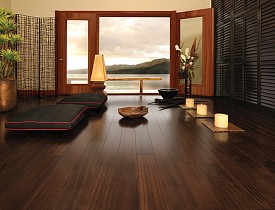 My favorite tip in the book is to have a specific place or ritual for different activities. They suggest having a specific room for studying and another for relaxing. By doing so, different environments can become associated with various activities and trigger specific behaviors. It reminded me of Robert Zajonc's theory that thoughts and feelings are automatic companions to visual sensations and thereby influence our behavior. We don't just see a house, we see a "pretty" house or a "big" house. Whenever I see Tiffany, I think about the good times we've had, I feel happy, and smile. Athletic fields manifest feelings of excitement within me, leading me to want to workout. I've heard of other people craving coffee when they first wake up. Others are triggered to smoke when they drink alcohol. When I see cake, it triggers thoughts of happiness and celebration. Cultivating these environments/rituals can drastically effect how we: work, eat, relax and sleep.
 Some rituals may be helpful whereas others have negative consequences. Currently I am working on minimizing distractions and staying focused as I study for my licensure exam. I often find myself checking email, Facebook, ESPN, or working on small projects around the house instead of studying. After reading Managing Your Day to Day, I've decided to study in a specific room and set aside specific times each day for work and pleasure. When I enter a room, I'm telling my brain it's time to work or relax.
So far it's been a work in progress. I started out too aggressive with my time blocks and without much flexibility. Now I have a block of time dedicated for work/study with options for more before and after that block. I've also set a firm cut off at night for unwinding without work or email. Having specific rooms for various activities has work well and kept me focused.
Managing one's environment has been used with nutrition as well. Eating in front of the TV leads to overeating. In contrast, individuals who ate at a table consumed 30% less food. The TV distracts people from recognizing when they are full. Whereas eating at a table, while keeping pots and serving dishes in the kitchen, also leads to less consumption. It follows the Out of Sight Out of Mind theory. A year ago, I asked Tiffany to keep her "treats" in the pantry and it has helped with my cravings for sugar.
Using smaller plates can also change our visual perceptions and dining environment, helping people eat less food. When individuals were given larger plates they ate more and drastically underestimated their total consumption. Researchers found that people typically fill their plate 3/4 full regardless of the plate size. I used to do the same thing. If the plate wasn't full, I didn't think it would satisfy me. All too often I would end up feeling stuffed after eating so much.
Sleep is another area that experts suggest a designated room. If you have trouble sleeping, like I do, limit the activities you do in the bedroom to sex and sleep. Doing so will trigger your body to start unwinding when you enter the bedroom. I recently stopped reading stimulating books while in bed. The books would generate ideas and I wouldn't be able to sleep. Now I typically fall asleep within 5 minutes.
If a room in your house doesn't help with triggering a desired affect, try going to a specific park, trail, library, coffee shop, etc. Joel Oascoigne describes walking on a local trail every day to relax and reflect. He has come to know the trail so well, that he can simply let go and reflect.
Developing creative rituals has made it easier for me to work, eat, relax, sleep, and accomplish my goals. Enjoy
Subscribe to:
Posts (Atom)