Friday, July 25, 2014

Takeru Kobayashi


Takeru Kobayashi revolutionized the Nathan's hot dog eating contest. In his first attempt at the famed contest in 2001 he ate 50 hot dogs in 12 minutes. The previous record was 25. Recently he was interviewed on the Freakonomics podcast sharing his tips on deliberate practice and creative ways to tackle obstacles. One of the most interesting comments was about how he handles defeat. He said, "Sometimes you win because the other person is having a bad day and sometimes you lose because you're having a bad day. Winning or losing doesn't mean you're the best. In the long run, you can't look at competing against others. All you can do is compare yourself to yourself and see how far you can go."

How PROFOUND!  You're really only competing against yourself.

All too often we compare ourselves to others and feel inadequate or develop a false sense of superiority. It reminds me of the banter between Richard Sherman & Michael Crabtree & Patrick Peterson. Who is better? Who is the best? Can we answer that? Does it matter? Some athletes talk trash to get in the heads of their opponents and throw them off their game. However, the athlete/person who stays focused on themselves will always succeed.

NFL legend Bill Walsh said the secret to his coaching success was staying focused on what mattered. Bill didn't worry about the other team or things outside his control. He focused on HIS job and what HE could do. He taught his athletes to live in the moment by moment processes that would lead to success. He won several games with this philosophy and even cherished some of the losses because he knew he did everything he could on that day.

If one can develop a similar attitude, there would be no limits. No more shame or doubt. No more distractors. Only Joy. 

Wednesday, July 16, 2014

IM Chattanooga Preview

This past weekend Tiffany I visited Chattanooga to scope out the city and ride the bike course for the upcoming September Ironman. From Cincinnati the trip is about 5 hours straight down 75.

Bike Course
The bike course is relatively flat with a few rollers and false flats going south. The return trip home has several fast downhill sections. Nowhere on the course are there technical turns. To compare it with other courses, I would rate the bike course as slightly easier than IM Louisville. During our training ride we saw several other riders and they said the course is very popular on Saturdays or Sundays with minimal car traffic. The roads were mostly smooth with a small 5 mile section of old cracked pavement when you first start the two loops. The course is also marked with orange paint to help with navigation, although in some spots it was faded.

The run course travels east along a pedestrian trail before transitioning to the road. From there it travels over a bridge then back over a wooden pedestrian bridge. The course is fairly flat with a small hill between mile 1 and 2 that zig zags up the pedestrian trail.

Adventures
Rock City - It is a beautiful natural trail through rock formations on the top of Lookout Mountain that leads to a waterfall. We would definitely go again. Plan 1.5 to 2 hr for your self guided tour.
Ruby Falls - It is a guided tour through a cave to an indoor waterfall. It takes about 1.5 hr with several unique stalagmite formations along the way. I really enjoyed it, but you have to be patient with the slow journey.
Incline - It is a train ride up the mountain. It's claim to fame is the fact that it is the steepest incline in the USA. A round trip takes about 1 hr. It was interesting, but not worth the money.
Hunter Museum - It is a museum that overlooks the Tennessee River with several historic works of art. It is on the run course and the area has several cute restaurants.
Cloudland Canyon State Park - This was our campsite. We rated it as our favorite campsite so far. It was on top of a mountain with breathtaking views, hikes, and two gorgeous waterfalls. They also have Yurts (wooden floors and walls with a canvas roof) and Cabins.
Hang Gliding - On our bucket list. Tandem trips cost $249 to $299. The instructor said it is the number one ranked hang gliding location in the world.
Train - There are several short train trips around the city. We plan to ride the train on our return trip during IM weekend.
Whitewater Rafting - It is advertised as the best whitewater rafting east of the Mississippi.
Food
Sugar's Ribs - Fabulous ribs at a local hole in the wall diner.
Terminal Brewhouse - This is where we watched the World Cup finale and enjoyed some homemade craft beers. They also have delightful pot roast nachos and a stout ice cream beer float.
Tremont Tavern - Huge beer selection and delicious sandwiches. It is located on the run course for potential spectators or thirsty athletes.
Cloudland Cavern - Near Cloudland Canyon State Park. It is supposedly the best steakhouse in Chattanooga, but only open Wed to Sunday.


Saturday, July 5, 2014

Small Specific Steps to Greatness


Meredith Kessler completed 20 Ironmans before 2007 with a personal best of 11:28. She was training long hours, but not seeing any improvement. She went hard all of the time and was constantly fatigued. She made a few specific changes, is now training only 15-17 hr per week with more focus on recovery and posting low 9 hr finishes. If Meredith can do it, who else might be able to make such a huge transformation?

Mary Beth Ellis was diagnosed with osteoarthritis in 2005 and told she couldn't run marathons anymore. She made a few changes, switched to triathlon, and is now one of the top female triathletes.

Jack Welch showed no particular inclination towards business even into his mid twenties. He majored in chemical engineering and considered becoming a professor before he took a job at GE. He made a few specific changes and became the most influential business manager of his time.

John D Rockefeller grew up a poor, forgettable, and indistinguishable child. Classmates and tutors have no recollection of John excelling at anything. He made a few specific changes and became the business magnate we know today.

Steven Ballmer started at P&G where he played waste-bin basketball with wadded up memos and was voted least likely to succeed. He made a few specific changes and before the age of 50 became the CEO of Microsoft. He recently purchased the LA Clippers NBA basketball team for $2 billion.

Jerry Rice did not possess typical NFL speed and was not recruited by major universities. He focused on specific tasks to improve his game and became the greatest wide receiver in the history of the NFL.

Winston Churchill grew up with a lisp. He focused on specific tasks to improve his public speaking and became one of the greatest orators of the 20th century.

In 1978, a famous research participant with an average IQ went from struggling to repeat 9 digits spoken aloud to recalling 82 digits after 250 hr of deliberate training over 2 years.

Several chess grand masters have IQs that are below average.

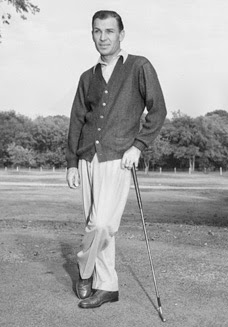
Ben Hogan, one of the greatest golfers in the history of the sport, was uncoordinated and graceless as a child.

Darwin and Tolstoy were considered ordinary children. Elvis Presley, Ray Charles, and Lucille Ball were told they had little potential for their chosen fields.

Challenge: What's holding you back from making specific changes to unleash your potential? What one small step can you take today?


Wednesday, June 25, 2014

What I'm Learning Now


Delay Gratification
I've noticed that I have a tendency to go to extremes.  When I find a good book, I fill my days with reading it.  Unfortunately, this leads to a lot of angst trying to find the necessary free time. After a while I reach a point of saturation and become bored. I've seen the same thing happen with surfing ESPN.com, listening to podcasts, exploring recipes, and searching for new training techniques. With ESPN, I've purposely set boundaries to only visit the website during my third meal of the day.  As a result, I have something to look forward to and it maintains it's pleasure. I'm starting to do the same with my Podcasts and books.


Set Boundaries on Email and Social Media
I recently read a blog by Eric Baker on the daily activities of highly successful people. His number one tip is to stop checking email in the morning. He says checking email sets you up to react and gives your best hours to someone else’s goals. Your objectives become hijacked by others. Mr Baker referenced research that email: stresses you out, can turn you into a jerk, is more addictive than alcohol and tobacco, and checking email frequently may drop your IQ by 10 points. His suggestion is to wait one or two hours before viewing your email. For the past week, I've been delaying email until 4-7 pm and it's worked. I'm more focused on my priorities and not get distracted by others.


Recharge In The Evening Without TV or Internet
According to the American Psychological Association, the most effective stress-relief strategies are exercising or playing sports, praying or attending a religious service, reading, listening to music, spending time with friends or family, getting a massage, going outside for a walk, meditating or doing yoga, and spending time with a creative hobby. The least effective strategies are gambling, shopping, smoking, drinking, eating, playing video games, surfing the Internet, and watching TV or movies for more than two hours. Recently, I've stopped watching TV in the evening, which has opened up more time to read. No more flipping through channels trying to find something that is halfway decent to watch. Now I have more time for things that I want to do and are guaranteed to be rewarding.

Sunday, June 15, 2014

Believe

All accomplishments start with a belief. A thought that it would be really cool to _____.  From there it's just a matter of trusting yourself and taking a step forward.

I recently decided to do the 100 mile Hallucination run in 2016. Over the years, I have dreamed about participating in Badwater or the Hawaii Ultraman to test my limits. However, they never seemed realistic because they required multiple prerequisites to even enter their lottery systems. Fortunately, I had the pleasure of speaking to a few athletes that have finished a local 100 mile race. It rekindled my passion for the challenge and helped me to see it as a real possibility.

In 2006, I finished my first IM and was overcome with a profound sense of accomplishment.  Life became easier. Achieving that goal shifted my overall mentality from one of hope to anticipated success. Challenges once deemed impossible now seem doable and within reach.

The same phenomena occurred after Roger Bannister became the first person to run the mile in under four minutes. Soon after, several other top runners were also breaking the four-minute mark. Prior to Bannister's achievement, the four-minute barrier was unthinkable. When one believes, possibilities morph into inevitabilities.

No one will ever accomplish everything they set out to do. Which is actually a good thing because it teaches us to be gracious in defeat, resilient, and an example for others. When we witnessing others bounce back from defeat, it helps us realize that not achieving a goal is something everyone can confront and overcome. Michael Phelps failed to win 8 gold medals in 2004. He bounced back and accomplished the goal in 2008. I wonder how many people saw his accomplishment and found the necessary encouragement to initiate actions towards their own dreams. I know I did.

Can You Be Successful?
Yes. Some of us may have never learned or may have simply forgotten the process. Others may have lost their confidence to succeed. Fortunately, it is an easy skill that anyone can learn to master. It's simply a mater of patience and moving one foot forward. It is the completion of specific tasks within an overall plan. If you want to run a 5k or marathon, don't focus on the future race. Divert your attention to the present moment.  Focus on your 3 mile run today or if that's too overwhelming, focus on tying your shoes. When fear or doubt present themselves, make the steps smaller.  Focus on pulling the sheets back, focus on dressing, or focus on opening the front door. Success is a skill that, when practiced diligently, becomes second nature. It will consistently produce outcomes, creating a productive, vital, and passionate life. It all starts and grows with smalls step.

Success Is Possible
Can you imagine someone saying to his wife 'Hey, honey, I'm going to go to bed early tonight so I'll have plenty of energy to go out and fail tomorrow.' Countless people reenact this 'failure mentality' day after day in their lives. Many people, if not most, have more confidence in their capacity to fail than to succeed. Accept this moment and take a small step.  Don't expect to be a great artist if you haven't practiced.  Don't expect to be a fast runner if you haven't trained. Don't expect to be fluent in Spanish if you're not repeatedly using Duolingo.

Recognize that you are already a success and are doing the best you can at any given moment.  This is the most vital resource available. It will break the hidden chains of shame and help us become the best we can be. Believing in ourselves enables us to build and capitalize on our current skills. Do you believe?

Friday, June 6, 2014

Thoughts on Sodium and Fluids

Recently, there has been a lot of discussions challenging the traditional advice on fluid and electrolyte consumption. Tim Noakes, Paul Laursen #1 #2, Loren Cordain, and Inside Triathlon say, "Drink to thirst and do not worry about replacing electrolytes."

They say that fluid, electrolytes, cramps, and dehydration are not well understood and no one knows exactly what causes muscles to cramp. Furthermore, controlled research studies have not found any significant differences in fluid or electrolyte profiles between athletes that cramp and those that do not. Researchers point out that the only muscles that cramp are the ones that are being exercised. If it was just a matter of dehydration or electrolyte imbalance, the entire body would cramp.

Lorain Cordain says that normal body sodium levels are 140 mmol/L. During exercise, if 1 liter of fluid and 60 mmol of sodium is excreted (typical amounts for "salty" sweaters) then the new sodium concentration is 142 mmol/L. Which is actually a rise in sodium concentration. He goes on to say that the best way to fix a cramp is to stretch it, not consume a sports drink. Therefore he reasons that dehydration and electrolytes are not the real cause of cramps. When examining actual race results, the American College of Sports Medicine may suggest limiting body weight loses to 2%, but many athletes continue to perform at very high levels with body-weight losses of 3% or even greater. In fact, it is often the most dehydrated athletes in a race that typically finish first.

Haile Gebrselassie and Alberto Salazar are two perfect examples of athletes who have high sweat rates yet performed extremely well. Some argue that having a high sweat rate is actually a benefit. During races, "heavy sweaters" are better able to cool their body. There is also the issue of the source of fluid losses. Some of the losses occur as a result of water being released during the utilization of glycogen while the rest of the losses come from extracellular fluid. Intracellular fluid, however remains the same.

So What Causes Cramps
  • Poor posture or inefficient biomechanics affects the "strain gauges" in muscles. 
  • Cramps result from the breakdown of protein for fuel when carbohydrates are not readily available. 
  • Engaging in an activity or with an intensity or duration that one is not prepared for.

What To Do
  • Cordain suggests to reduce your intensity, stretch, and consume some carbohydrates. 
  • Dr Noakes suggests placing salt on the tongue to reduce cramps. It tricks the brain and the cramps go away. The same phenomena has been shown with placing carbohydrates in the mouth and receiving a short term boost of energy. It's not so much the physiological benefits of these substances, but how much the brain dictates performance. 
  • See your high sweat/salt rate as a positive. Tell yourself you're better equipped at cooling your body. 
  • Don't rely on the thirst mechanism, consume 20-40 oz per hr. I believe we're too distracted and ignore signs of thirst during a race. We do need fluid to digest the calories we consume. Also, if you find yourself belching, drink water to help with digestion.
  • Consume 400-800 mg sodium per hour when racing over 4 hours. From what I have read and experienced, it will not harm performance and it may enhance nutrient absorption. I also believe that we need some sodium to balance out the large amount of fluid we consume during long races. For athletes, such as my wife, who drink a ton of water it may also help minimize the risk of hyponatremia.
  • As always practice, to train your body as well as find out what works best for you.
Daily Sodium Intake
  • If you are following a low carb high fat diet, you may need to increase your daily sodium intake to compensate for a reduction in blood pressure. 
  • Research has revealed that increasing fruit and vegetable consumption can completely offset the negative effects of dietary sodium. The positive benefits seem to be from the high potassium levels in fruits and vegetables that leads to a better sodium/potassium ratio.

Friday, May 30, 2014

Using Practice to Brake Barriers

Another great interview from IMTalk that stimulated a few thoughts. Nutritionist Dr Dan Benardot was interviewed about nutrition and was emphatic about the importance
of practice. While working with several Olympic runners, including Meb Keflezighi and Deena Kastor, he found that they did not like to eat prior to running. They said they couldn't do it. After a little practice they were able to eat before running. Some athletes said they couldn't consume more than a few ounces of fluid while running. After a little practice they were able to do it.

I've seen this fixed mindset in myself and others. If we can't do something the first time or second, we believe it's not possible. Cancer patients believe they can't eat because they don't have an appetite. Runners believe they can't consume the recommended calories during a race because it upsets their stomach. I fear that I will never master Motivational Interviewing because I struggle with it.

Typically the problem is a result of a failure to practice. I read a book on MI and I've occasionally looked back over my notes, but I have never deliberately practiced the skill. On the other hand, every Saturday I practice consuming calories each mile during my long runs in accordance with my race day plan. As a result, my stomach tolerates the calories I need to perform.

If you want to be better with confrontation, don't just read a book, practice it. If you want to have more confidence, develop a plan and practice it. If you want to learn any new skill, be intentional and practice it. Just because you can get by without practice today, doesn't mean you will be able to excel later. I can get by without practicing MI with most of my clients, but I eventually struggle with the highly resistant ones.

Weekly Quickies: Short Frequent Intentional Behaviors to Unconscious Habits.
Practice doesn't have to be long or arduous. 
Small behaviors performed frequently build exponentially. 
Try 5 minutes, if that's too much, try 1 minute.
If you struggle in the morning, try practicing in the evening